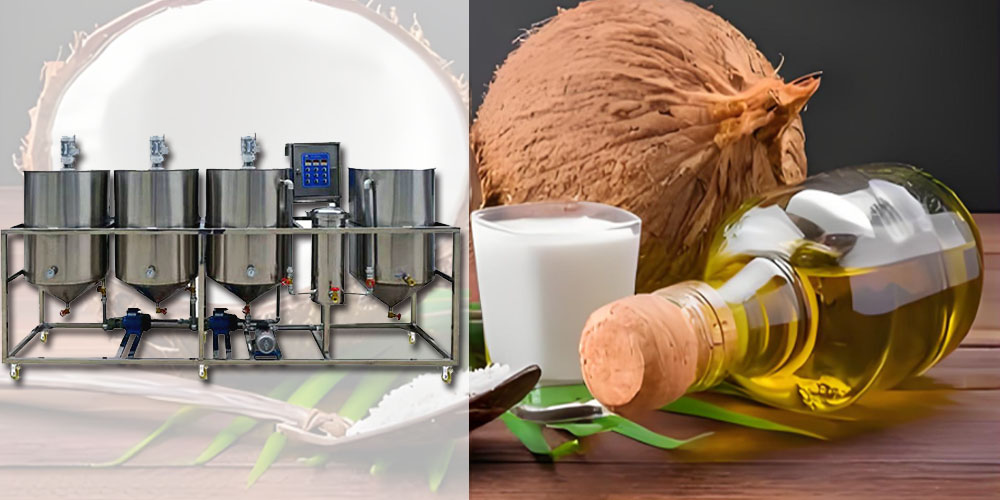
Set up Small Coconut Oil Refining Factory
Coconut oil production is a widely versatile product that can be used both in the kitchen and in the bathroom as part of a skin or hair care routine.With the growing popularity of healthy eating concepts, coconut oil has seen sustained market demand due to its rich content of medium-chain fatty acids and high digestibility.
Establishing a small-scale coconut oil refinery can not only meet local demand for high-quality cooking oil but also provide entrepreneurs with stable returns.
Whether you plan to use coconut oil or have your own coconut oil production plant, it is important to understand the difference between refined and cold press coconut oil so that you can purchase the right coconut oil or coconut oil production equipment to start a coconut oil processing plant. (Technical guidance: Coconut Oil Refining Factory Layout).

Table of Contents
- How to Design Coconut Oil Refining Plant Layout?
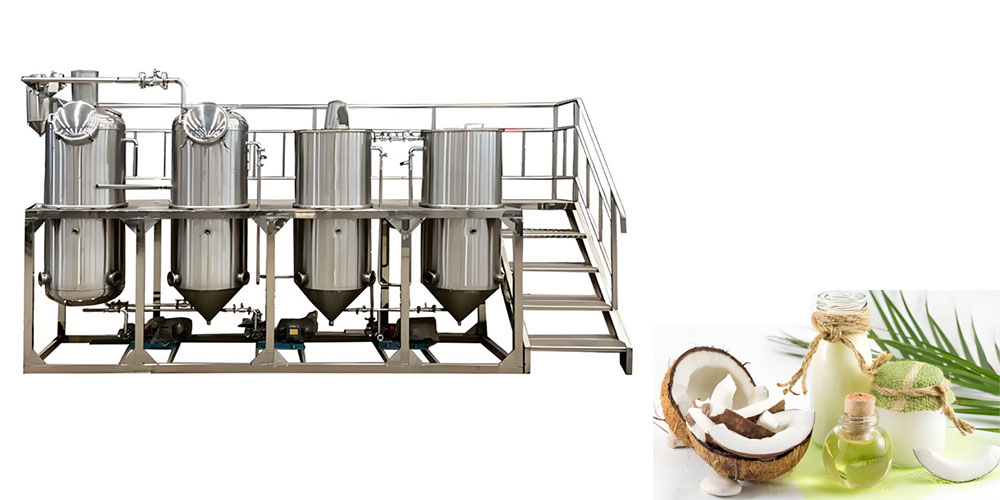
- Coconut Oil Refining Series Supporting Equipment
- Steps for Refining Coconut Oil
- Coconut oil is used across various industries
- Start Your Refining Equipment Business
How to Design Coconut Oil Refining Plant Layout?
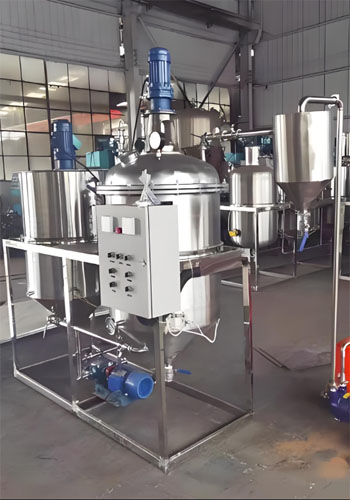
The coconut oil refining process is completed at the coconut oil processing plant. _ The layout design of a coconut oil processing plant is critical to increasing coconut oil product capacity and reducing operating costs. The layout design requirements to maximize a coconut oil plant include:
- Satisfy Coconut Oil Production Process Requirements:The design of a coconut oil plant should fully consider the characteristics of coconut oil refining, including coconut oil production process and technology, packaging and transportation of raw materials and final products, etc.
- Reasonable Choice of Coconut Oil Factroy Structure:A suitable structural system should also be selected according to the production process requirements, materials and construction conditions in order to save investment costs and shorten the construction period.
- Ensure a Good Operating Environment
- A standard coconut oil processing plant should have good lighting, ventilation and landscaping, etc., and good control of noise, temperature, humidity and other conditions.
- Scientific Coconut Oil Manufacturing Arrangement:Large space and room arrangement can maintain good sanitary conditions.

Coconut Oil Refining Series Supporting Equipment
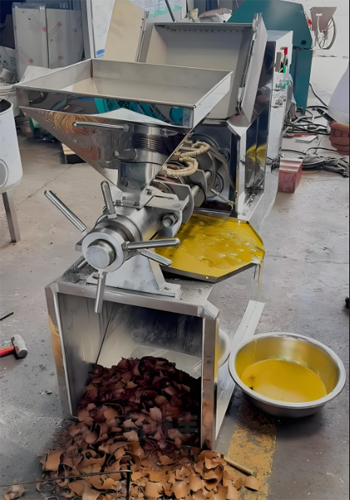
- Coconut Oil Press:The coconut oil press extracts oil from coconut meat through physical pressing. It offers both cold-pressing and hot-pressing options.
- Cold-pressed: Extracted at low temperatures (typically below 60°C) to preserve the natural nutrients and flavor of coconut oil, suitable for producing high-quality edible oil.
- Hot-pressed: Involves heating the coconut meat to reduce its viscosity and increase oil yield, though this may degrade some nutrients; suitable for industrial-scale production.
- Process Flow: Raw material processing, shelling and drying, removal of coconut husk, drying coconut meat to a moisture content of 4%-7%.
- Cold-pressing process: Directly pressing crushed coconut meat at a lower temperature than hot-pressing, better preserving nutrients.
- Hot-pressing process: Heating coconut meat to 60-80°C before pressing to increase oil yield.
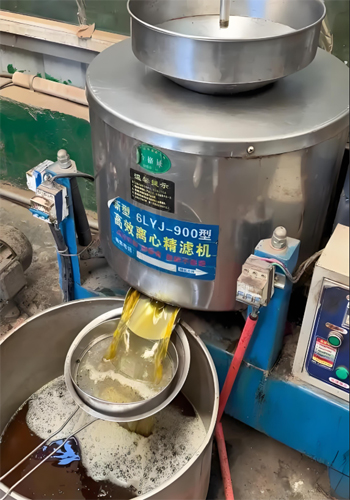
- Filtering: Remove impurities from crude oil using plate-and-frame filters or vacuum filters.
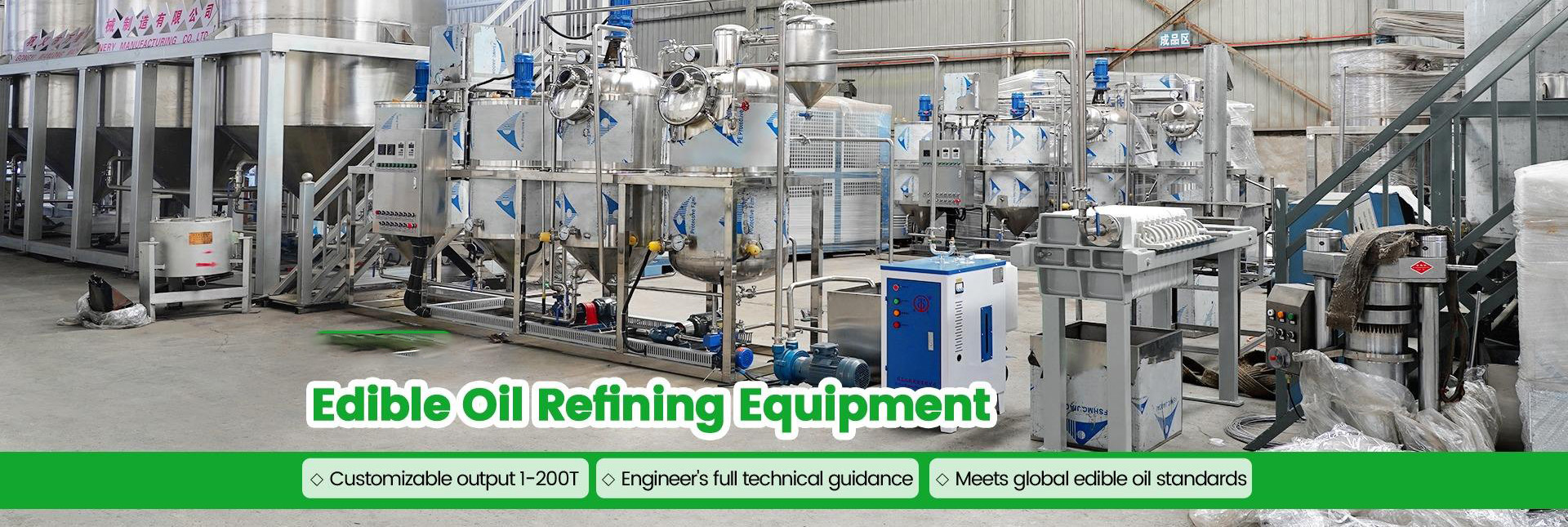
- Refining (optional): Subject crude oil to degumming, deacidification, decoloring, and deodorization processes to produce premium-grade edible oil.


Steps for Refining Coconut Oil
- Degumming: Heat crude oil to 60°C, add 0.1% phosphoric acid solution, stir for 30 minutes, then let stand for 2 hours to separate gums.
- Alkali Refining: Calculate NaOH dosage based on free fatty acid content (theoretical alkali amount + 10% excess alkali). Neutralize at 70°C for 20 minutes, then centrifuge to separate soapstock.
- Decolorization: Heat refined oil to 90°C, add 2% activated white clay, vacuum decolorize for 30 minutes, filter to remove clay.
- Deodorization: Distill with steam under vacuum at 230°C for 2 hours to remove volatile odorants.
Coconut oil is used across various industries
Coconut oil, as a versatile natural fat, finds extensive applications across multiple sectors including food, health, beauty, and industry due to its unique composition—such as medium-chain fatty acids, lauric acid, and vitamin E—and its physical properties.
- High-temperature stability: Coconut oil contains a high percentage of saturated fatty acids (approximately 90%) and has a smoke point of 177°C, making it suitable for high-heat cooking methods such as frying, deep-frying, and baking without easily producing harmful substances.
- Flavor Enhancement: Cold-pressed coconut oil retains its coconut aroma, making it ideal for Southeast Asian dishes (such as curries and fried rice), baking (cookies and cakes), or dessert preparation to add tropical flavor.
- Chocolate and Confectionery: As a cocoa butter substitute to enhance smoothness and mouthfeel.
- Plant-Based Dairy: Used to produce coconut milk and coconut cream as alternatives to animal-based dairy products.
- Infant and Toddler Foods: Coconut oil is added to some infant formula products to provide easily digestible fats.
- Moisture Locking: Coconut oil forms a protective barrier to prevent moisture loss, ideal for dry and sensitive skin.
- Barrier Repair: Enriched with vitamin E and antioxidants to repair damaged skin.
- Makeup Removal & Cleansing: Dissolves makeup and impurities gently without irritation.
Coconut oil is recommended primarily due to its unique composition, wide range of applications, and relatively eco-friendly and sustainable characteristics. Establishing a refined coconut oil processing plant holds promising market prospects.
Start Your Refining Equipment Business
If you want to establish a coconut oil production plant, choosing Zhengzhou Fude Machinery as a partner is a decision worth considering. We adhere to the core concept of “innovation, quality, and service” and are committed to providing customers with high-quality mechanical equipment solutions. This innovative spirit helps companies maintain a leading position in fierce market competition and continuously launch new products that meet market demand. For coconut oil production plants, choosing an innovative and market-oriented enterprise can help the company continuously optimize processes and improve efficiency in the production process.

Related recommendations
-
How Does an Oil Press Turn Seeds into Profit?
288Problem: Turning raw seeds into valuable oil seems complex. Agitation: Inefficiency eats profits. Solution: Understand the oil press's core function. An oil press physically separates oil from oil-bearing materials like seeds or nuts using imme...
View details -
What is the core work of a screw press?
319A screw press uses a rotating screw inside a barrel to continuously squeeze oilseeds. This powerful mechanical pressure separates the liquid oil from the solid meal or cake.The main job sounds simple: separate oil from solids. But a screw press d...
View details -
What plants are suitable for the spiral oil press to make oil
299Spiral oil press has a wide range of applicability and can press various plant oils to meet the needs of different users
View details -
How should I choose the raw material and the oil press?
290Many plant parts containing oil can be pressed, including common seeds like peanuts and soybeans, and less common ones like grape seeds. Choosing the right oil press depends on the oilseed's characteristics, required pre-treatment, processing sca...
View details
Oil Press Equipment and Oil Refining Machinery for Sale – Start Your Oil Press Business