 Oil Press Equipment and Oil Refining Machinery for Sale – Start Your Oil Press Business
SEARCH WHAT YOU WANT
Search allProductNews
SEARCH
Are you planning to set up an edible oil refinery or upgrade your current facility? Do you want to invest wisely in oil refining equipment?
I am Fude Machinery. My company specializes in oil processing equipment. I can help you. Choosing the best oil refining equipment is a crucial decision for your business. This decision impacts your product quality, operational efficiency, and long-term profitability.
Prior to selecting oil refining equipment, clarifying your business needs is the critical first step—overlooking it may result in costly mismatches, such as ill-sized equipment or models unsuitable for your oil type.
This initial assessment underpins your entire project, ensuring your equipment investment aligns with current requirements and future growth plans (e.g., scalable units for rapid expansion, robust processes for high-purity demands). The team at Fude Machinery prioritizes these core questions to tailor solutions that avoid inefficient purchases and maximize your ROI.
Production capacity is the key factor determining the size and type of oil refining equipment, directly affecting initial investment and operational costs.
You need to define daily/monthly/annual output targets (e.g., 1–5 tons/day for small-scale, 50–100+ tons/day for large-scale). Small operations suit cost-effective, flexible batch refining systems; medium-to-large operations need high-throughput, automated, energy-efficient continuous refining lines. Underestimating capacity leads to costly upgrades later, while overestimating causes wasted capital and underutilized machinery. Our team helps you accurately assess capacity needs and future growth plans, ensuring your equipment fits current and expanding business demands. For small edible oil refinery solutions, check our tailored offerings.
Budget is a practical constraint that dictates your choices for oil refining equipment in terms of technology, automation and scale.
You need a realistic budget covering not just the equipment itself, but also shipping, installation, commissioning and staff training—these extra costs can add 10–30% to the equipment price. We offer cost-effective options for all budgets: budget-friendly batch refining units for new businesses, and high-efficiency, automated continuous lines for established manufacturers. Note that the cheapest upfront option may not be economical long-term, as poor-quality equipment leads to higher maintenance costs, lower oil yields and frequent breakdowns. Our goal is to deliver equipment that maximizes your investment value and long-term profitability.
The type of crude oil you refine is a key factor in determining the required oil refining equipment and processes, as different oils have distinct compositions and impurities.
For instance, palm oil needs robust decolorization and fractionation to address its high carotene and free fatty acid content; sunflower oil requires winterization to eliminate waxes and prevent cloudiness; soybean oil needs efficient degumming to reduce phospholipids. Our oil processing equipment is suitable for a wide range of raw materials (soybean, peanut, sunflower, palm, cottonseed, etc.). We analyze your crude oil’s specific characteristics and tailor or customize equipment to remove its unique impurities, ensuring your edible oil meets targeted quality standards.
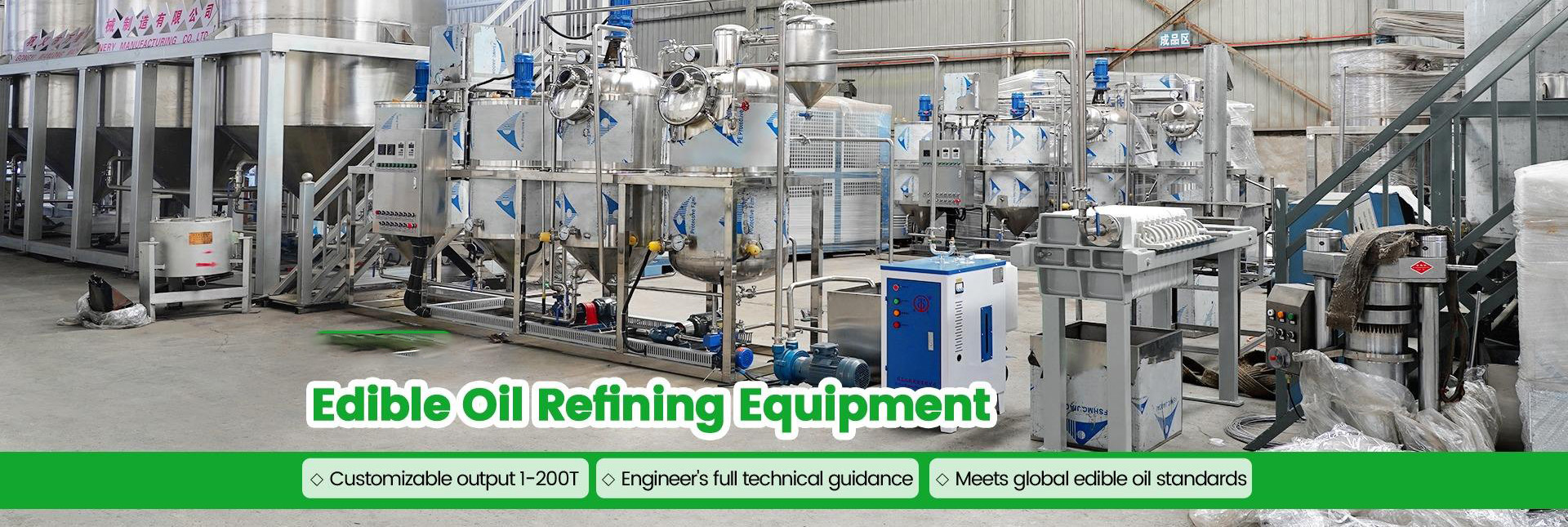
Understanding different oil refining technologies is key to choosing suitable equipment, as each method has pros and cons tied to your oil type and business goals.
Fude Machinery provides a full range of refining solutions, covering the two primary methods: chemical and physical refining. While both purify oil, they differ in chemical consumption, energy use and byproduct management. You also need to choose between batch and continuous processing, based on production volume and automation needs. Each technology requires specific equipment components—clarity on these differences helps you select the optimal oil refining equipment to balance quality and cost-effectiveness for your operations.
The choice between chemical refining and physical refining is a fundamental decision for your oil refining equipment. Each method addresses impurities differently. They have distinct implications for your operations.
Chemical refining involves using chemical reagents, primarily caustic soda, to neutralize free fatty acids. This process is effective for a wide range of crude oils. It is particularly suitable for oils with lower FFA content. It typically involves degumming, neutralization (using alkali), washing, and then drying, decolorization, and deodorization. The main byproduct is soapstock, which needs further processing or disposal. This method is well-established. It offers good control over product quality. However, it can result in higher oil loss due to entrainment in the soapstock. It also requires careful management of chemical reagents and wastewater.
Physical refining combines deacidification and deodorization into one step. It uses high temperature and vacuum steam distillation. This effectively strips away free fatty acids. This method is generally preferred for crude oils with high FFA content, such as palm oil. It avoids the use of chemicals for neutralization. This eliminates soapstock production. This can lead to lower oil loss and reduced environmental impact. However, it requires higher capital investment for specialized equipment. It also demands more energy for heating and vacuum systems. My team will help you analyze your crude oil characteristics. We will assess your specific needs. Then, we will guide you in choosing the oil refining equipment for the most suitable and cost-effective method.
The choice between batch and continuous oil refining systems hinges on your production scale and operational flexibility needs.
Batch systems process oil in discrete batches, ideal for small-scale operations (1–20 tons/day). They offer strong flexibility to switch between crude oil types and adjust process parameters, with lower upfront costs and simpler operation—perfect for new businesses or those with diverse product lines. Continuous systems enable uninterrupted oil flow, suited for large-scale production (30+ tons/day). They deliver higher throughput, better energy efficiency, and consistent product quality, but require larger initial investment and more complex operation. We provide both batch and continuous oil processing equipment, and will help you select the optimal solution aligned with your current and future production goals.
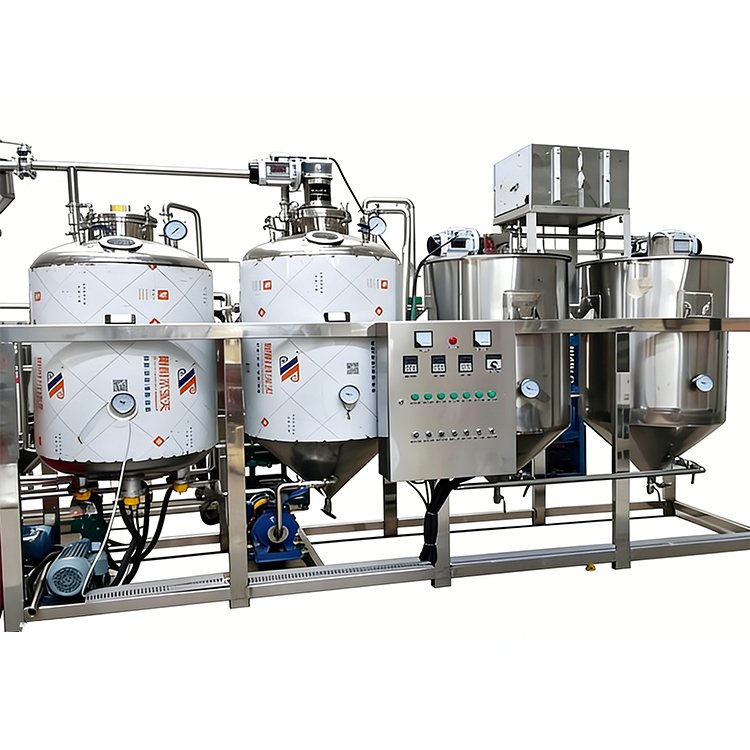
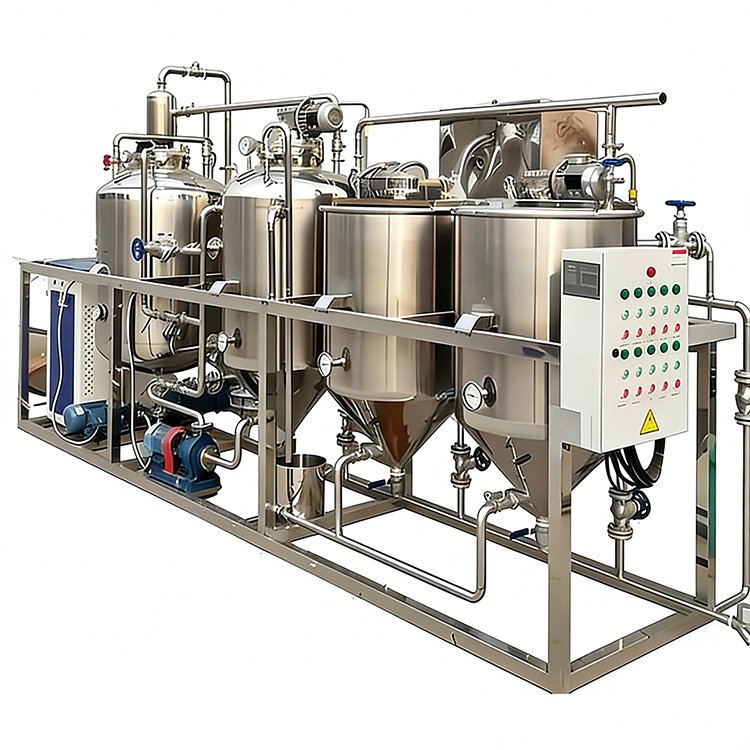
Any oil refinery relies on core specialized equipment corresponding to key refining steps (degumming, neutralization, decolorization, deodorization).
Refining tanks handle degumming and neutralization via chemical mixing; filter presses separate solids for oil clarity; decolorization tanks use bleaching earth to remove pigments; deodorizers eliminate off-flavor volatile compounds under high-temperature vacuum conditions, supported by a robust vacuum system. A reliable heating system (thermal oil furnace or steam boiler) supplies required heat. For wax-containing oils like sunflower oil, a winterization unit (crystallizers + filters) is also needed. We provide all these essential components for a complete, efficient refining line.You can learn about our article: Process of Refining Machine
When selecting oil refining equipment, look beyond basic functions—specific features determine long-term performance and economic viability, setting top-tier equipment apart from standard options.
Fude Machinery integrates these critical features into all designs. We believe the best equipment hinges not just on capacity, but also on operational efficiency, oil yield, and reliability. For instance, a slightly higher upfront-cost machine with superior energy efficiency saves more over its lifespan, while systems minimizing oil loss directly boost revenue. Evaluating these details ensures your equipment delivers maximum long-term value for your business.
Energy consumption is a major operational cost for edible oil refineries, so high-efficiency oil refining equipment delivers substantial long-term savings.
Fude Machinery designs equipment with energy conservation at its core: our high-efficiency heat exchangers recover heat from refined oil to preheat crude oil, cutting fuel consumption by 25–30%; optimized vacuum systems maintain deep vacuum with lower power use; fully insulated tanks and pipes minimize heat loss; and precise temperature control prevents energy waste from overheating. While energy-efficient equipment may have a slightly higher upfront cost, the long-term operational savings quickly offset this expense, making it a cost-effective investment.
Maximizing oil yield is critical to the profitability of edible oil businesses—every percentage of oil loss directly cuts revenue, and high yield is a key trait of top-tier oil refining equipment.
Oil loss can happen during degumming, neutralization, decolorization and filtration. Our oil processing equipment is engineered to minimize such losses: advanced centrifuges enable efficient gum separation to retain more oil; optimized neutralization tanks reduce oil entrainment in soapstock; high-performance filter presses thoroughly separate bleaching earth, leaving little oil in filter cake. Even a 1–3% increase in yield may seem minor on paper, but it translates to significant extra revenue and better profit margins over large production volumes. Investing in high-yield equipment is a direct way to boost your business’s financial success.
Automation is revolutionizing edible oil refining, boosting the efficiency, consistency, and safety of oil refining equipment.
Our modern oil processing equipment integrates advanced PLC and DCS automation systems, which automatically control and monitor key parameters like temperature, pressure, flow rates, and chemical dosages. This precision cuts human error, ensures consistent oil quality, reduces manual intervention, lowers labor costs, and boosts operational efficiency. Automated malfunction shutdown features also enhance safety and protect equipment. Investing in automated equipment delivers higher output, reliable performance, and consistent quality to keep your business competitive.
Choosing top-tier oil refining equipment means picking the right partner—one that delivers reliable machinery and comprehensive support.
Fude Machinery is more than a supplier; we are your trusted partner with decades of oil processing expertise. We offer tailored solutions and unparalleled support, all centered on quality, efficiency, and customer satisfaction. Choosing us isn’t just a purchase—it’s an investment in a partnership dedicated to your business’s long-term success, minimizing risks and maximizing growth potential.
Comprehensive support is vital for the smooth operation of oil refining equipment, and we stand by you throughout your project journey.
Our full-service support covers end-to-end needs: expert pre-purchase consultation, optimal refinery layout design, equipment manufacturing and shipping management, on-site installation and commissioning by experienced technicians, and thorough personnel training for safe, efficient machine operation and maintenance. We also provide reliable after-sales service—including technical assistance, prompt spare parts supply and troubleshooting—with global coverage to serve facilities worldwide. This complete support package minimizes downtime, protects your investment, and ensures continuous, profitable production.
Every edible oil business has unique raw materials and market demands, so customizing your oil refining equipment ensures a solution that perfectly matches your specific needs.
Our engineering team analyzes your crude oil characteristics, production goals, and space constraints to tailor refining solutions. This targeted approach lets you avoid paying for unnecessary features while retaining all essential capabilities, optimizing equipment performance and efficiency to boost product quality and meet your unique business objectives.
Our extensive global experience is a key advantage, as it lets us understand the diverse market demands and operational environments for oil refining equipment.
We have exported our oil processing equipment to over 120 countries, gaining invaluable insights into varied regulations, climates, and local preferences that shape refining operations. This expertise enables us to design equipment reliable in any setting, while our adherence to international quality standards helps your refined oil access global markets. Our proficiency in international logistics and technical support ensures smooth project execution worldwide. Partnering with a globally proven company like ours minimizes your risks and delivers high-quality, consistent-performing oil refining equipment.
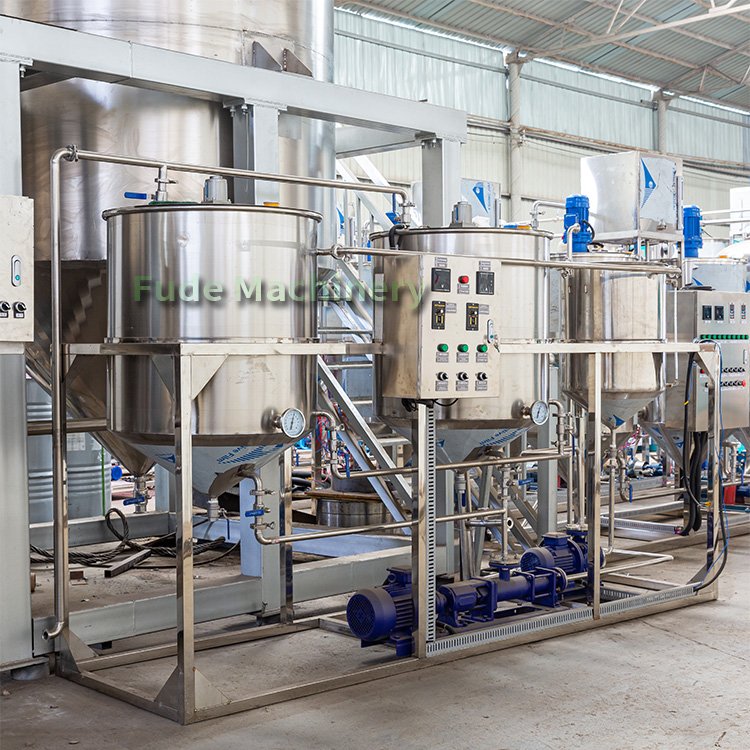
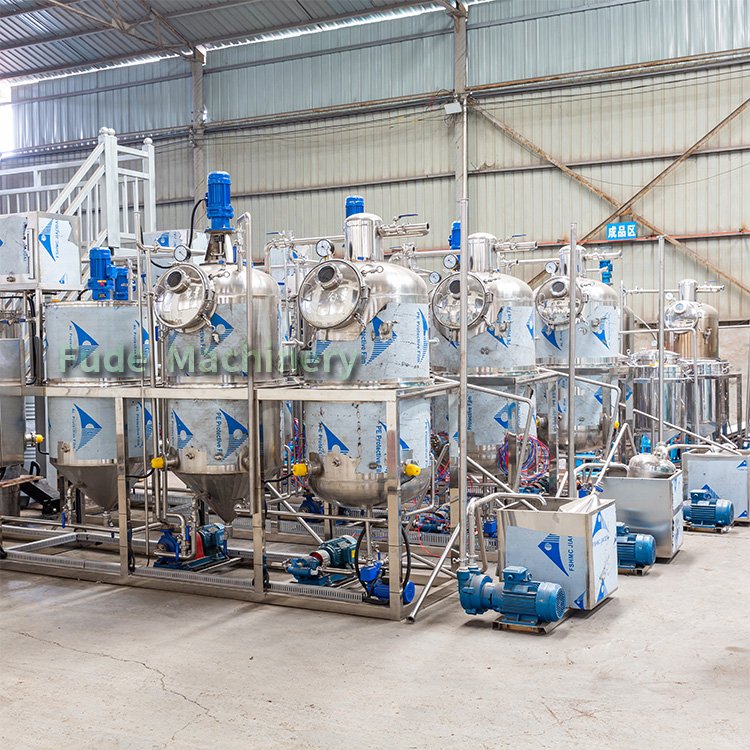
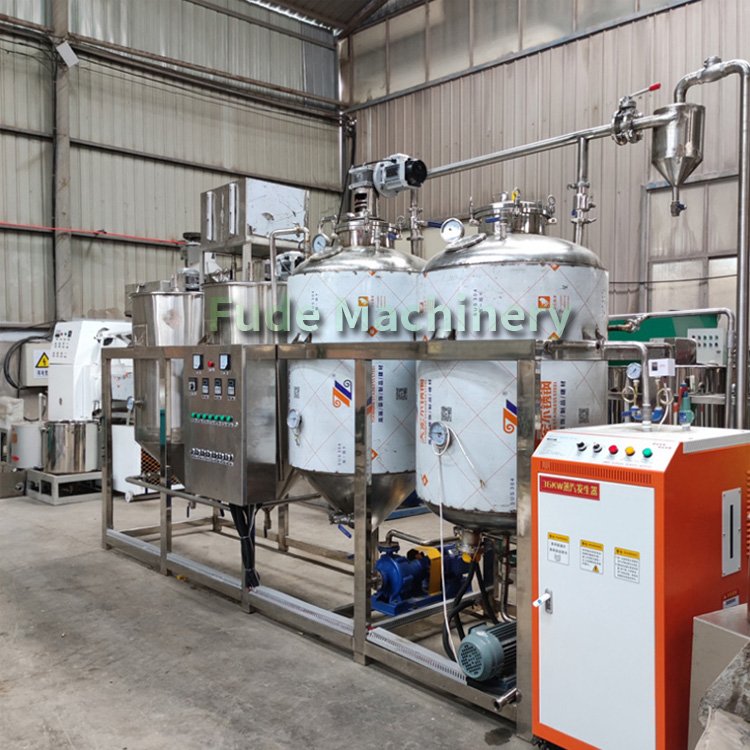
Choosing the best oil refining equipment is a strategic decision. It needs careful consideration of your business needs, the available technologies, and specific equipment features. I have shown you that factors like capacity, oil type, energy efficiency, yield, and automation are crucial. Partnering with a reliable manufacturer like me, Fude Machinery, is equally important. My direct sales model, comprehensive support, and customization capabilities ensure your investment is smart and yields long-term success.
Are you ready to choose the best oil refining equipment for your business?
Contact Fude Machinery’s expert team today. Get a custom solution designed just for your business. Let us help you achieve your production goals.

The heating and pressing process of a spiral oil press includes multiple steps such as preheating, pressing, temperature and moisture control. These links are interrelated and influence each other, jointly determining the squeezing effect and oil ...
View details
Refinery equipment is a key device used to convert crude oil or other oil raw materials into various petroleum products or oil products. The refining process is complex and diverse, therefore requiring a wide variety of equipment. Here are some c...
View details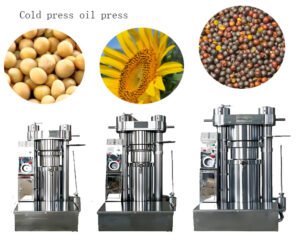
The market for healthy, natural, and organic food is growing fast. Consumers are willing to pay more for products they trust. For an entrepreneur like you, this trend is a golden opportunity. A high-quality cold press oil machine is your key to e...
View details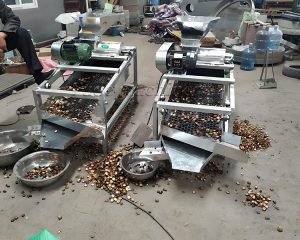
The tea seed shelling machine is suitable for various tea trees that can produce oil tea seeds suitable for shelling treatment
View detailsThis website uses cookies to improve your browsing experience. By continuing to use this site, you accept the use of our cookies. Data collected from this website is processed and stored in the United States.