 Oil Press Equipment and Oil Refining Machinery for Sale – Start Your Oil Press Business
SEARCH WHAT YOU WANT
Search allProductNews
SEARCH
You have successfully used an oil press to extract crude oil. But what is the next step to grow your business? The answer is refining. So, what is an oil refinery machine? It is a set of equipment that cleans and purifies crude vegetable oil. This machine turns your basic crude oil into a high-quality, clear, and stable product that can be sold for a much higher price.
We are Fude Machinery, a B2B manufacturer of oil processing equipment. We build these refinery systems for businesses like yours. This guide will explain how an oil refinery machine works and how it acts as a profit engine for your operation.
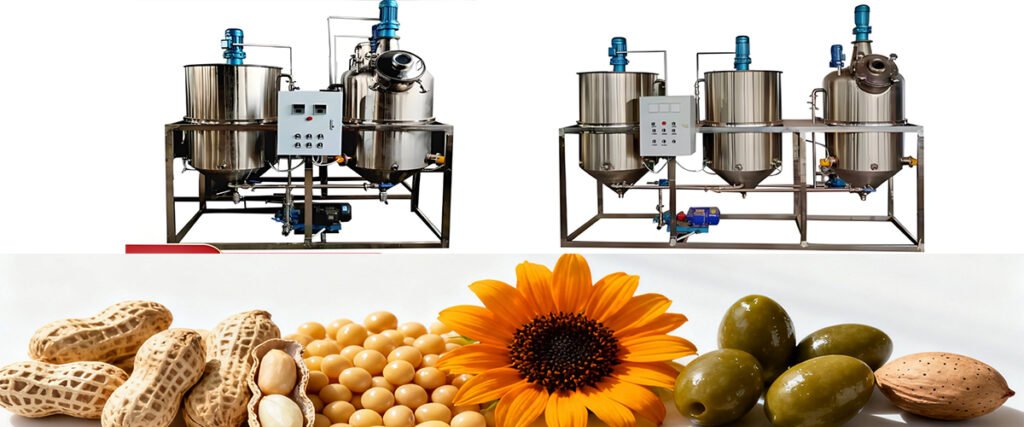
You need to refine your crude oil to increase its value, improve its quality, and make it suitable for the retail market. The crude oil that comes directly from an oil press is not ready for the kitchen. It contains many impurities.
These impurities include things like gums, free fatty acids, pigments, and odors. Gums, also known as phospholipids, can settle at the bottom of the bottle as sediment. Free fatty acids give the oil a sour taste and make it spoil quickly. Pigments give the oil a dark and inconsistent color.
And odors from the raw seeds can be unpleasant. An oil refinery machine is designed to remove all of these impurities in a systematic way. The result is a clean, stable, and attractive final product. This refined oil has a longer shelf life, a better taste, and a more appealing appearance.
This is what allows you to package it, brand it, and sell it to supermarkets and consumers at a premium price. Refining is the step that moves your business from selling a raw commodity to selling a finished consumer good.
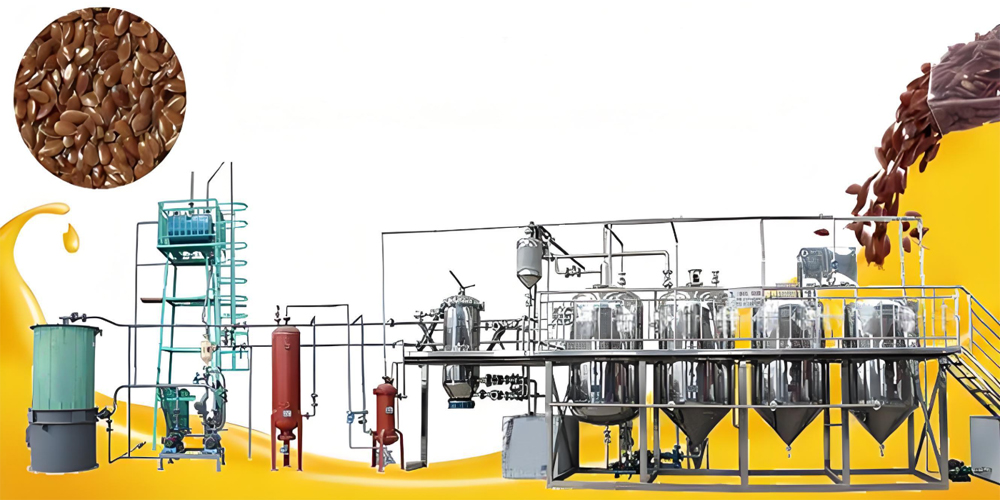
An oil refinery machine works through a series of four main steps. Each step targets and removes a specific type of impurity. This multi-stage process ensures that the final oil is pure and meets international quality standards. We design our systems to make this process efficient and easy to control.
The four core processes are Degumming, Deacidification, Decolorization, and Deodorization. These steps are usually performed in separate, specialized tanks or vessels that are connected to each other. In a small or medium-sized plant, these processes are done in batches. This means you process a certain amount of oil through all the stages before starting the next batch. In large industrial plants, the process is continuous. For businesses producing up to a few tons per day, the batch oil refinery machine is the most common and cost-effective solution. Let’s look at what happens in each of these four critical stages.
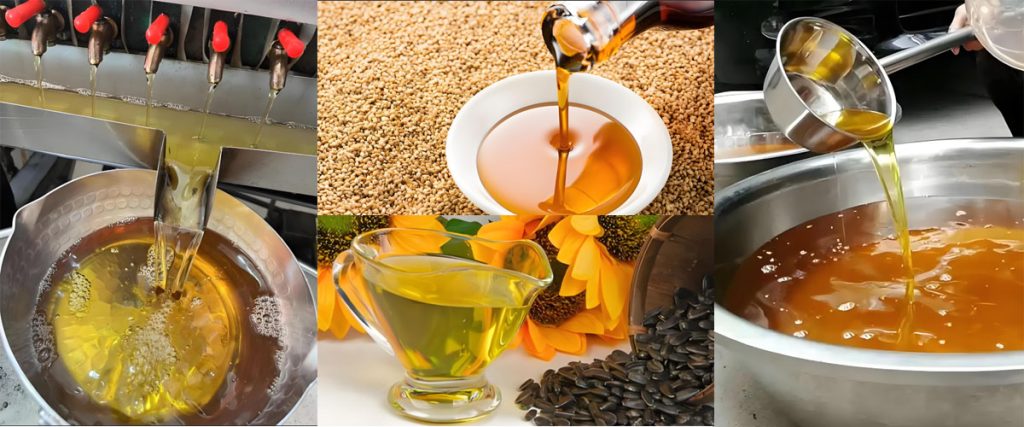
The first step is to remove the gums. These are sticky substances, mainly phospholipids, that are suspended in the crude oil. If they are not removed, they will settle at the bottom of the oil over time, making it look cloudy and unappealing. To remove them, we use a simple process. Hot water or a mild acid is mixed into the crude oil. This causes the gums to absorb water and become heavy. They then separate from the oil and can be easily removed. This initial step is crucial for preparing the oil for the next stages of refining.
The next step is to neutralize the Free Fatty Acids (FFAs). These acids are naturally present in crude oil and give it a harsh, sour taste. They also cause the oil to smoke at lower temperatures when cooking. To remove them, we add a calculated amount of an alkali solution, usually caustic soda. The alkali reacts with the FFAs and turns them into soap. This soap mixture is called soapstock. It is much heavier than the oil, so it settles at the bottom of the tank and can be drained off. This process dramatically improves the taste and stability of the oil.
After deacidification, the oil is clean but may still have a dark or undesirable color from natural pigments like chlorophyll or carotene. To create a light, clear oil that consumers prefer, we use a process called bleaching or decolorization. In this stage, the oil is mixed with an adsorbent material, such as activated clay or activated carbon. This clay has a special structure that acts like a magnet for color pigments. It absorbs the pigments from the oil. Afterwards, the oil is passed through a filter press to remove the clay, leaving behind a much lighter and brighter oil.
The final step is to remove any remaining unwanted odors and flavors from the oil. These odors can come from the original seeds or from small compounds created during the earlier processing steps. To do this, we use a process called steam distillation under a high vacuum. The oil is heated to a high temperature, and live steam is passed through it. The combination of heat, steam, and vacuum turns the volatile odor compounds into vapor. This vapor is then pulled out of the system, leaving behind a completely neutral, bland, and odorless oil that is perfect for cooking.
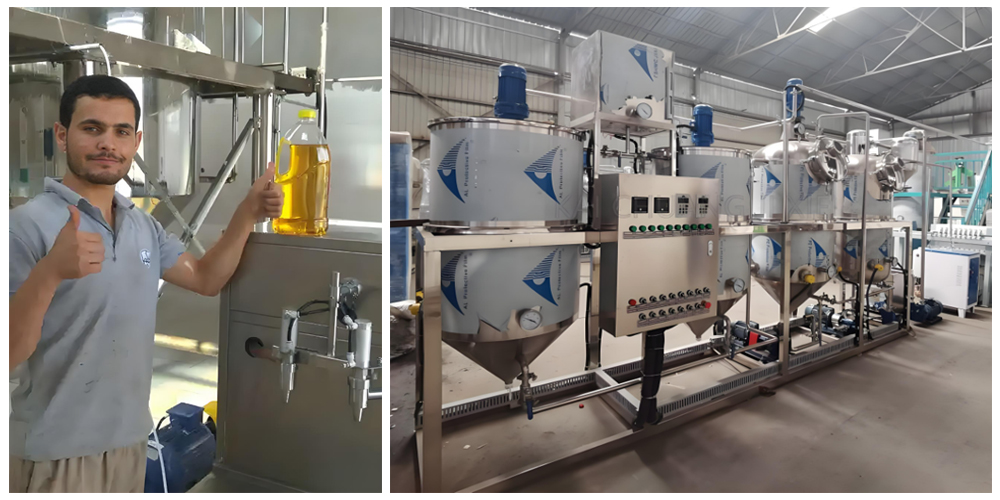
To see how this fits into a full production line, you can explore our solutions for a complete oil mill plant.
As a manufacturer, we offer two main types of oil refinery systems: batch refineries and continuous refineries. The best choice for your business depends entirely on your production capacity and your budget.
For small to medium-scale producers, the batch oil refinery machine is the most popular choice. These systems are designed to process a specific quantity of oil at a time, for example, 1 ton or 2 tons per day. They are more affordable, have a smaller footprint, and are easier to operate. They offer excellent flexibility, allowing you to refine different types of oil in the same equipment. The continuous oil refinery, on the other hand, is designed for large-scale industrial operations, usually processing 30 tons per day or more. These are fully automated systems that run 24/7. They are more efficient at a large scale but require a much larger initial investment.
| Feature | Batch Oil Refinery Machine | Continuous Oil Refinery Machine | What This Means for Your Business |
|---|---|---|---|
| Capacity | 500 kg – 10 tons / day | 30 tons / day and above | Batch is perfect for startups and SMEs. |
| Initial Cost | Lower | Much Higher | Batch has a faster return on investment for smaller volumes. |
| Flexibility | High (can easily switch oil types) | Low (designed for one oil type) | Batch allows you to adapt to market changes more easily. |
| Operation | Simpler, manual controls | Fully automated, complex | Batch requires less specialized technical staff. |
| Best For | Small & medium oil mills | Large industrial oil groups | We can help you choose the right scale for your goals. |
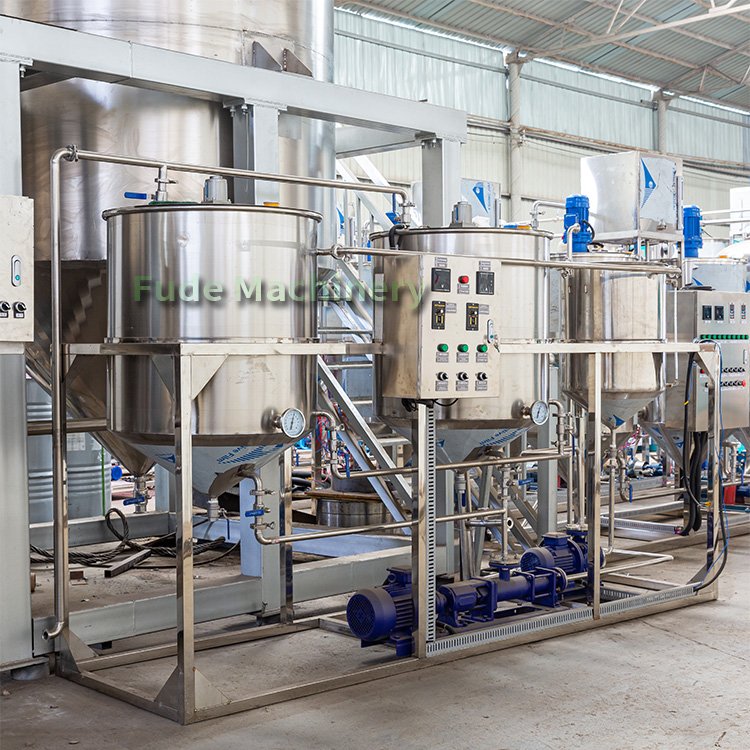
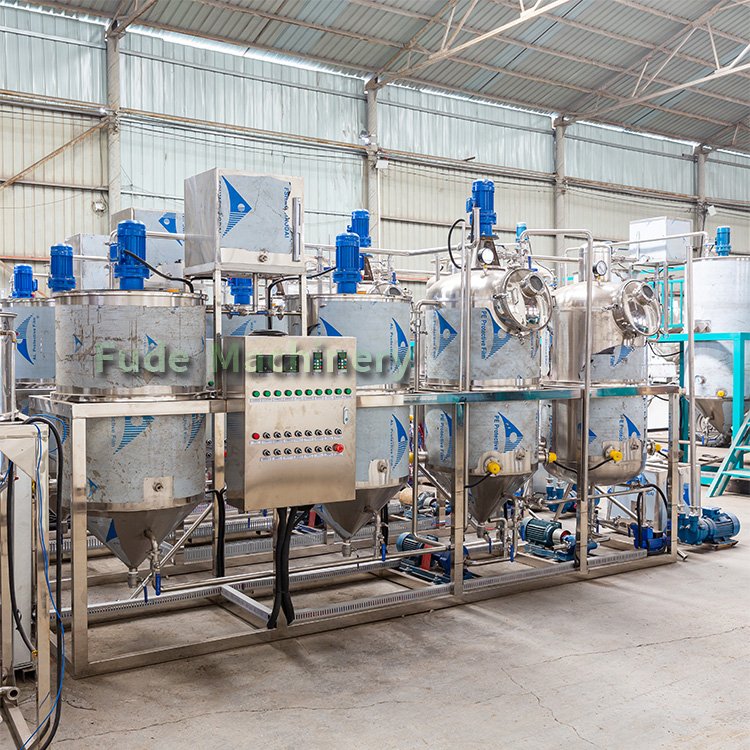
Investing in an oil refinery machine provides several powerful benefits that directly increase your revenue and grow your business. This equipment is not just a cost; it is a strategic tool for value addition.
The most obvious benefit is the significantly higher selling price of refined oil compared to crude oil. You can often sell refined oil for double the price or more. This dramatically increases your profit margin. Secondly, you gain access to a much larger market. Supermarkets, food manufacturers, and export markets all require refined oil that meets specific quality standards. Refining allows you to meet these standards. An oil refinery machine also gives you a consistent, stable product. This helps you build a strong brand reputation for quality. Finally, the byproducts of refining, like soapstock, can sometimes be sold for other industrial uses, creating an additional small revenue stream. For a deeper look at specific processes, consider our guide on the hot vs. cold press peanut oil process, where refining is the final step.
So, what is an oil refinery machine? For your business, it is the key to unlocking the true value of your oil. It is a system that purifies your crude oil through a four-step process: degumming, deacidification, decolorization, and deodorization. This process removes all impurities, resulting in a high-quality, stable, and valuable final product.
Investing in a batch oil refinery machine is the logical next step for any small or medium-sized oil mill that wants to grow. It allows you to increase your profit margins, enter new and larger markets, and build a strong brand. As a manufacturer, we can provide you with a reliable and cost-effective system that is perfectly sized for your production needs. This machine is a direct investment in the future profitability and success of your business.
We are Fude Machinery, a professional B2B manufacturer of oil processing equipment based in Zhengzhou, China. We specialize in providing complete solutions for the edible oil industry, from oil extraction to refining. As a factory-direct company, we offer high-quality, reliable machinery at competitive prices. We have successfully exported our oil refinery machine systems and other equipment to businesses in more than 120 countries, helping them build profitable and sustainable operations.
Are you ready to take your oil business to the next level?
Contact our expert team at Fude Machinery today. We will provide a professional consultation and a customized quote for the perfect refinery system for your needs.
Vegetable oil has wide variety of uses when it comes to food for example it is used in making cooking oil, mayonnaise, salad dressing, and many more. Also, it is involved in the production of non-food substances such as fatty acids, soaps, resin...
View details
Need to get oil from palm fruit? It seems complicated. I can explain how palm oil extraction works. Palm oil extraction takes fresh fruit bunches (FFB) through stages like heating, shaking, pressing, and cleaning to make crude palm oil (CPO). I...
View details
Operating a screw press involves more than just flipping a switch. Many small details impact your results significantly. Let's explore the critical operational secrets shared by seasoned professionals, beginning with the often-misunderstood step ...
View details
How is an oil press used to extract oil? Is there any profit from oil extraction? If you happen to have doubts about oil processing business, let's explore this topic together. So, how do oil presses work? An oil press is a machine that us...
View detailsThis website uses cookies to improve your browsing experience. By continuing to use this site, you accept the use of our cookies. Data collected from this website is processed and stored in the United States.