 Oil Press Equipment and Oil Refining Machinery for Sale – Start Your Oil Press Business

SEARCH WHAT YOU WANT
Search allProductNews
SEARCH
Choosing edible oil refining equipment is an important decision for any small oil plant.
The right system should match your crude oil type, daily capacity, final product requirements, available utilities and workshop space. A small plant does not always need a large continuous refinery. In many cases, a properly designed batch or semi-continuous system can provide greater flexibility and a more practical starting point.
Fude Machinery supplies edible oil refining equipment for small, medium and commercial oil processing projects. We can help you compare process options and prepare an equipment configuration according to your project requirements.
Request an Edible Oil Refining Equipment Proposal
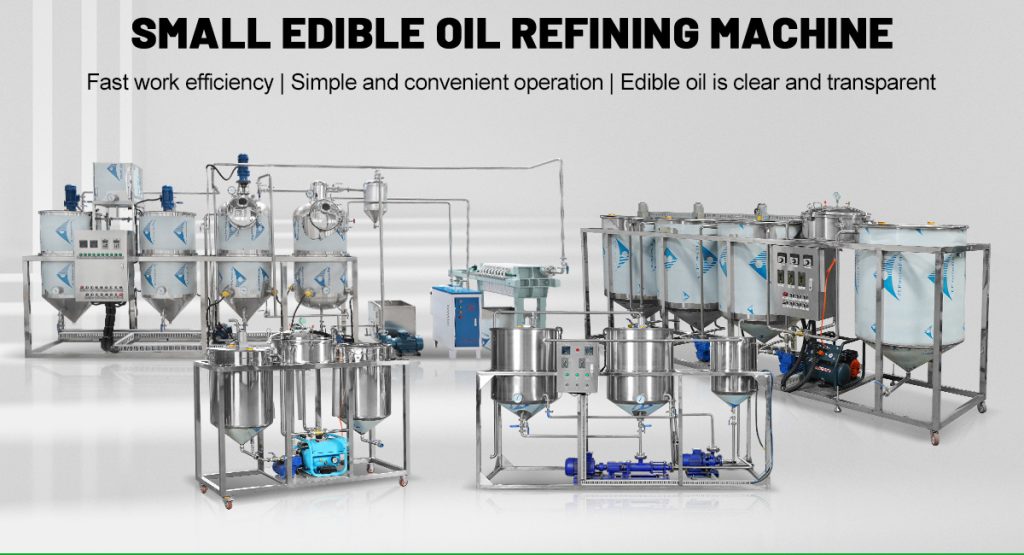
Edible oil refining equipment is used to remove selected impurities from crude vegetable oil and improve its appearance, stability, taste and storage performance.
Crude oil from pressing or extraction may contain:
The refining system treats these components through filtration, degumming, neutralization or deacidification, bleaching, deodorization and other processes.
The required equipment depends on the crude oil. Palm oil, soybean oil, sunflower oil, peanut oil, rapeseed oil and other oils may require different process conditions.
Small oil plants often have specific limitations:
Choosing an oversized system may increase the initial investment, energy consumption and maintenance requirements.
Choosing an undersized system may limit production and make future expansion difficult.
The best approach is to select a refinery according to your actual production plan and leave space for future additions.
A typical edible oil refining process may include:
Crude Oil Filtration → Degumming → Neutralization or Deacidification → Washing and Drying → Bleaching → Filtration → Deodorization → Dewaxing if Required → Storage and Filling
Not every oil requires every stage. The final process should be confirmed according to the crude oil analysis and finished oil requirements.
The first filtration stage removes suspended particles and protects pumps, tanks and downstream equipment.
Degumming removes phospholipids, gums and some water-soluble impurities.
This stage reduces free fatty acids. Chemical neutralization or physical deacidification may be selected according to the oil type and process design.
After chemical treatment, washing may remove residual soap or water-soluble materials. Drying reduces moisture before bleaching.
Bleaching earth or another suitable adsorbent can reduce pigments, trace metals and oxidation products.
The used bleaching earth is separated from the oil through a suitable filter.
Deodorization removes unwanted odors and volatile compounds under controlled temperature and vacuum conditions.
Some oils may require dewaxing or winterization to improve clarity during low-temperature storage.
Batch refining equipment treats oil in separate production cycles.
It may be suitable for:
Advantages may include:
Semi-continuous systems combine batch treatment with improved transfer and process control.
They may be suitable for medium-sized plants that require more stable operation but do not need a fully continuous refinery.
Continuous systems are designed for larger capacities and longer operating hours.
They may include automated:
Continuous refining normally requires a more detailed plant layout, stable utilities and trained operators.
Refining capacity is usually expressed in tonnes per day.
Before selecting a model, estimate:
Do not select a refinery only according to the largest possible production figure. A practical capacity should match your raw material supply and market demand.
For a new project, it may be more practical to start with a flexible batch system and reserve space for future tanks, filters or automation.
Palm oil may require specialized handling for temperature control, storage and fractionation depending on the final product.
Palm kernel oil has different characteristics from palm oil and should be evaluated separately when designing the process.
Soybean oil may require degumming and further refining stages according to its crude oil quality.
Some sunflower oils may require dewaxing or winterization to improve low-temperature clarity.
Peanut oil refining should consider crude oil quality, odor, pigments and final product requirements.
Rapeseed oil may require a refining process based on phospholipids, free fatty acids, color and odor.
The best configuration should be based on crude oil testing rather than using the same process for every oil.


An edible oil refinery may require:
Before requesting a quotation, confirm:
The utilities should be considered together with the main equipment. A refinery cannot operate properly if the heating, cooling or vacuum systems are undersized.
A small refinery may require:
The final configuration depends on whether the project includes only refining or a complete process from seed pressing to packaged oil.
For pressing equipment, see our oil processing equipment.
If you also need an oil extraction system, review our screw oil press machine and oil press machine solutions.
Without basic crude oil information, it is difficult to select the correct process stages and operating conditions.
The total project cost may also include:
An oversized system may increase energy consumption and require more operators and workshop space.
Oil loss may occur during:
The process should be designed to control loss while meeting the desired oil quality.
The initial layout should leave space for additional tanks, filters, filling equipment or a higher-capacity refining section.
Different oils may require different treatment stages. A process designed for one oil should not automatically be used for another.
When comparing suppliers, review:
Ask the supplier to explain why each process stage is included.
A clear process flow and equipment list are more useful than a quotation that only shows a total price.
To prepare an edible oil refining equipment proposal, please provide:
If you do not have a laboratory report, send the crude oil type, target capacity and destination country first.
A small oil plant may use the following process:
Seed Cleaning → Oil Pressing → Crude Oil Filtration → Degumming → Neutralization → Bleaching → Deodorization → Storage → Filling
The actual process depends on the crude oil and final product.
For more information about the refining process, visit our edible oil refining equipment page.
Regular maintenance helps keep refining equipment operating consistently.
Important tasks may include:
The final maintenance schedule should follow the equipment manual and local operating conditions.
The best option depends on the crude oil, capacity, final product, utilities, workshop and budget. Batch refining equipment is often considered for smaller and more flexible projects.
No. The process may differ according to phospholipids, free fatty acids, pigments, waxes, moisture and odor compounds.
A typical bleaching section may include a bleaching tank, dosing system, heating system, vacuum system and filter.
Not always. The need depends on crude oil odor, final product requirements and the selected refining method.
Yes, if the initial workshop layout includes sufficient space, utilities and storage planning.
Some systems can process different oils, but the process conditions, cleaning procedures and sequence may need to be adjusted.
The price depends on capacity, process stages, equipment materials, automation, heating, vacuum, filtration, storage and delivery location.
Yes. We can provide layout drawings, installation instructions, operating guidance and remote technical support. On-site service can be discussed according to project requirements.
Are you planning to build or upgrade a small oil plant?
Send us your crude oil type, daily capacity, destination country and final product requirements. Fude Machinery will help you compare batch and continuous refining options and recommend a suitable equipment configuration.
Request an Edible Oil Refining Equipment Proposal
You can also send:
We will review your project and provide the next recommended step.

Building a peanut oil line seems complex. Do you know the steps? Let us help you understand the process simply. Building a peanut oil production line involves several key steps. It starts with preparing the raw peanuts. Then you press the oil out....
View details
Centrifugal oil filter is an efficient, economical, and safe oil purification equipment, widely used in multiple fields
View details
Making vegetable oil requires specific steps and reliable equipment. We at Fude Machinery understand this process well. We design and manufacture comprehensive oil processing equipment in Zhengzhou, China. This includes everything from initial see...
View details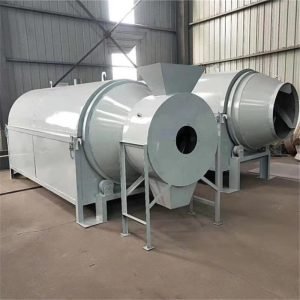
The drum dryer has certain requirements for materials, which are mainly based on the physical and chemical properties of the materials to ensure the efficiency, safety, and maintenance of material quality during the drying process
View details